
Bruising vs swelling — the difference
These are often conflated but they are different processes with different timelines:
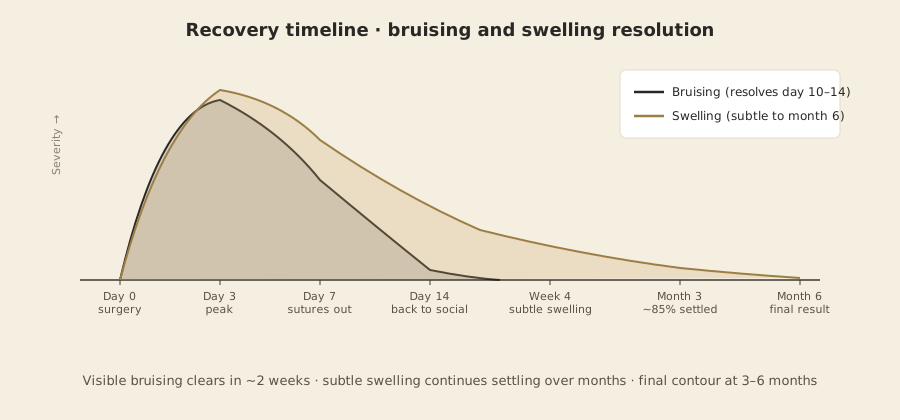
- Bruising is extravasated blood under the skin — caused by small vessel disruption during surgery. It peaks at days 2–3 and resolves at days 10–14. Colour progresses purple → blue → green → yellow → resolved.
- Swelling is tissue fluid accumulation — caused by surgical trauma and inflammatory response. It peaks at days 2–3 and decays slowly over months. Subtle residual swelling can persist to month 6.
Prevention strategies (what actually works)
Genuinely effective:
- Stop blood thinners (aspirin, fish oil, vitamin E) 7 days pre-op
- Stop alcohol 48 hours pre-op
- Control blood pressure carefully if hypertensive
- Cold compresses immediately post-op
- Head elevation while sleeping (significant effect)
- Avoid bending below waist for 10 days
Possibly helpful:
- Arnica (oral or topical) — modest evidence
- Bromelain (pineapple-derived enzyme) — modest evidence
- Hydration above baseline — small effect
Not effective despite popular belief:
- Vitamin C megadosing
- Specific diets (anti-inflammatory, alkaline, etc.)
- Massage in the first 2 weeks (can worsen bruising)
When bruising or swelling warrants concern
Most bruising and swelling is normal. Contact the clinic urgently if:
- Sudden severe pain accompanied by rapidly worsening swelling on one side
- Significant vision change
- Bleeding that doesn't stop with gentle pressure
- Fever (>38°C) developing in the first week
- Increasing redness, warmth, or pus at the incision after day 4
These are rare but require immediate attention. For routine bruising/swelling questions, WhatsApp Doç. Dr. Erdal — replies during business hours, urgent issues take priority.
Frequently asked questions
Is one side more bruised than the other normal?
Yes — asymmetric bruising is very common (~50% of cases) and reflects which side small vessels disrupted more during surgery. It does not predict asymmetric long-term outcome.
Can I cover the bruising with makeup before day 10?
Not recommended until sutures are out and incisions are sealed (day 7–10). Yellow-stage bruising covers well with green-tinted color corrector under foundation.
Not sure if you're a candidate?
Blepharoplasty is most successful when patient anatomy, age, and goals align with what surgery can realistically deliver. Send three facial photos (front, profile, eyes-closed) and Doç. Dr. Erdal will give you an honest, no-pressure suitability assessment before you commit to anything.
Ready to discuss your case?
Doç. Dr. Erdal personally reviews every enquiry. Honest assessment of whether blepharoplasty is right for you, with no pressure to book.