Upper and lower blepharoplasty performed in Nişantaşı, Istanbul by an Associate Professor of Plastic Surgery. The goal is not "wide open" — it is rested, age-appropriate, and recognisably you.
The hallmark of bad blepharoplasty is the "wide-eyed" or "hollowed" look that follows over-removal. Our philosophy is conservative skin and fat preservation — you should look like yourself, awake.
Where appropriate — especially in lower blepharoplasty — fat is repositioned over the orbital rim rather than excised. This preserves long-term volume and avoids the hollowed look that develops years later.
Transconjunctival (no external scar) vs subciliary (when skin must be removed) — these are not interchangeable. The decision is made on examination, not on a price-list package.
Blepharoplasty is most successful when patient anatomy, age, and goals align with what surgery can realistically deliver. Send three facial photos (front, profile, eyes-closed) and Doç. Dr. Erdal will give you an honest, no-pressure suitability assessment before you commit to anything.
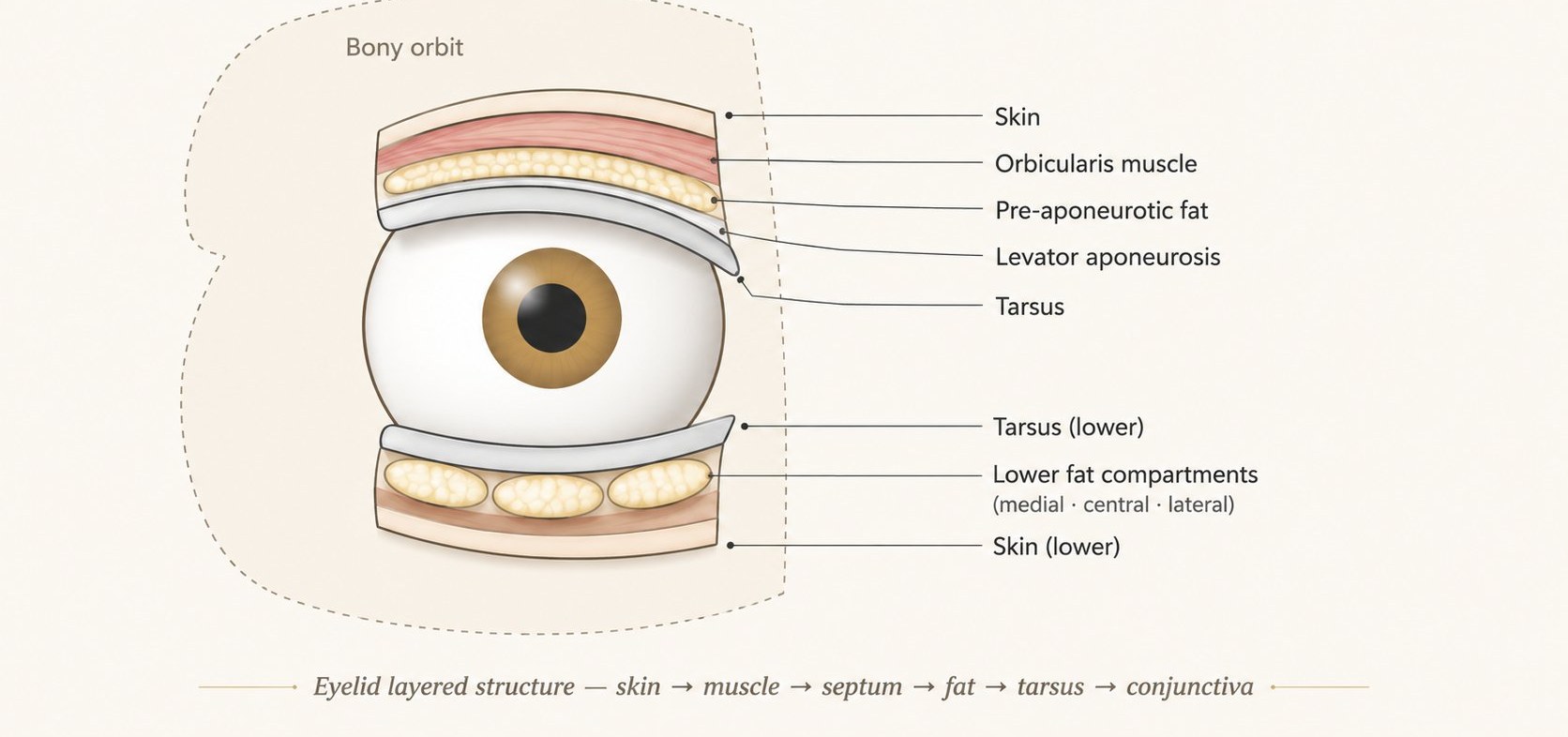
The two areas address different concerns and are sometimes done together. Understanding which procedure does what helps you set the right expectations.
Removes redundant skin (and a small strip of muscle/fat) along the natural lid crease. Addresses hooded lids that obscure the lid platform, make the eye look tired or smaller, and in some cases impair peripheral vision.
Upper blepharoplasty →Addresses under-eye bags, tear-trough hollows, and excess lower lid skin. Choice between transconjunctival (inside the lid, no scar) and subciliary (external, addresses skin) depends on what needs correcting.
Lower techniques →
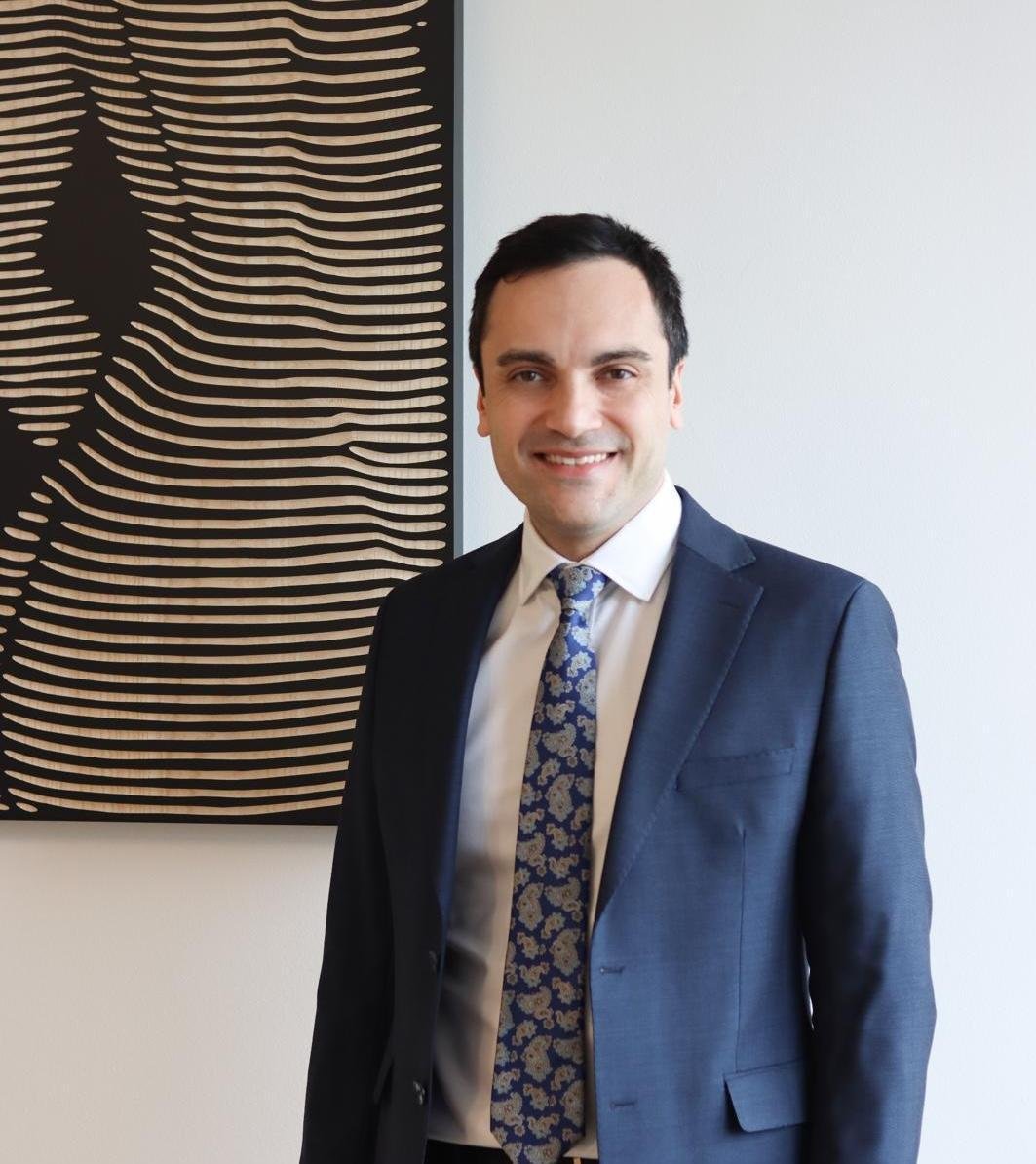
Associate Professor of Plastic, Reconstructive and Aesthetic Surgery, double board-certified by the American College of Surgeons (FACS) and the European Board (FEBOPRAS).
Dr. Erdal trained at Hacettepe University Faculty of Medicine and has authored peer-reviewed publications in international plastic surgery journals. His Nişantaşı practice is dedicated to facial aesthetic surgery for international patients, with an explicit conservative philosophy on periorbital work in particular — the eye region is where bad surgery is hardest to hide and hardest to revise.
Member of ISAPS, IPRAS, EURAPS, and the Turkish Society of Plastic, Reconstructive and Aesthetic Surgery. Holds the Turkish Ministry of Health USHAŞ international health tourism certification.
Read full biography →Skin redundancy obscuring the lid platform or making the eye look tired.
Read more →Herniated lower lid fat pads creating a permanent "puffy" or tired appearance.
Read more →The dark, hollow groove from the inner corner of the eye down across the lower lid.
Read more →Lower blepharoplasty cases performed by Doç. Dr. Erdal, photographed at 3, 5, and 6 months post-operative across multiple angles. The clearest sign of good eyelid surgery is that it doesn't announce itself.
View before & after gallery →Doç. Dr. Erdal personally reviews every enquiry. Honest assessment of whether blepharoplasty is right for you, with no pressure to book.