
What it is and what it isn't
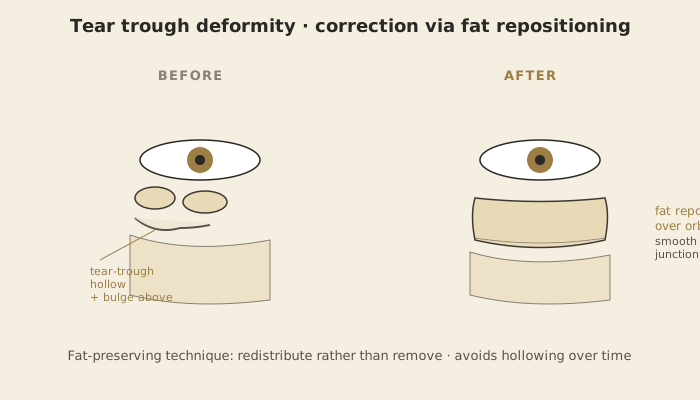
The tear trough is a real anatomical groove — the seam between the lower lid and the cheek, where the orbital rim sits closer to the skin than the surrounding tissue. In some people it's almost invisible; in others it forms a deep, visible hollow.
It is not the same as:
- Dark circles from pigmentation — surface pigmentation that doesn't change with light angle
- Dark circles from vascularity — thin skin showing underlying vessels
- Bag-cast shadow — the dark band below a fat bag
Many patients have a combination — and identifying which components contribute most matters for choosing the right treatment.
Treatment options
Three real options exist:
- Hyaluronic acid filler in the tear trough — gives immediate volume, lasts 9–18 months, reversible if needed. Best for younger patients with isolated tear-trough hollow and no bag.
- Fat repositioning as part of lower blepharoplasty — the herniated lower lid fat is mobilized and secured over the orbital rim, filling the hollow. Permanent, addresses both bag and hollow.
- Fat grafting — fat harvested elsewhere (typically thigh) is injected into the trough. Longer-lasting than HA filler but technique-sensitive; survival is variable.
The right choice depends on age, whether there's a coexistent bag, and how often the patient wants ongoing maintenance.
Frequently asked questions
Should I try filler first or go straight to surgery?
Filler is reasonable to try first if you're under 40, the hollow is isolated, and you're undecided about surgery. It gives you a preview of what surgical correction would look like. If you find yourself happy with the result and re-injecting every 12 months indefinitely, surgical fat repositioning becomes the more cost-effective long-term choice.
Does tear-trough filler 'migrate' or look puffy?
It can — particularly if injected too superficially or in too-large volumes. Good results require careful injector technique and patience: small amounts spaced weeks apart, building gradually.
Not sure if you're a candidate?
Blepharoplasty is most successful when patient anatomy, age, and goals align with what surgery can realistically deliver. Send three facial photos (front, profile, eyes-closed) and Doç. Dr. Erdal will give you an honest, no-pressure suitability assessment before you commit to anything.
Ready to discuss your case?
Doç. Dr. Erdal personally reviews every enquiry. Honest assessment of whether blepharoplasty is right for you, with no pressure to book.