
First 48 hours: maximum impact
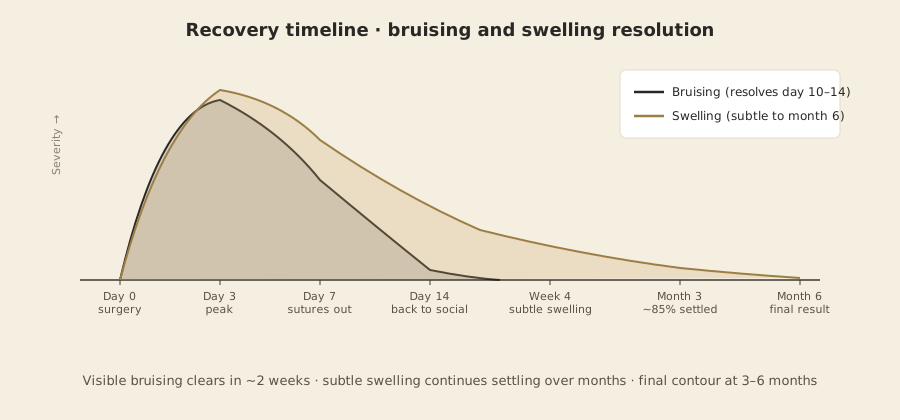
Day 0 — surgery day: You go home (or hotel) the same day, accompanied. Eyes feel "tight" and tearful. Cold compresses every 20 minutes for the first 6 hours. Lubricating drops every 2 hours. Sleep with head elevated on 2–3 pillows.
Day 1: Maximum swelling begins. Vision is fine but the eye region feels heavy. Most patients describe it as "uncomfortable, not painful." Continue cold compresses every 1–2 hours.
Day 2: Swelling peaks. Bruising starts to show — initially purple/dark red. The face looks worst on day 2–3. Stay home, eat soft food, avoid stooping or lifting.
Days 3–7: turning the corner
Day 3: Swelling begins to subside slightly. Bruising remains prominent. Reading or screen time tires the eyes quickly — limit to 30 minutes at a time.
Day 4: Most patients feel functionally fine but still look swollen. Light walking outdoors helps circulation.
Day 5–7: Sutures removed (upper lid surgery; transconjunctival has dissolving sutures, no removal needed). Bruising shifts from purple to yellow-green. Most patients can drive again. Sunglasses help in public.
Days 8–14: returning to social life
Day 8–10: Major bruising resolved or easily concealed with makeup. Most patients return to remote work.
Day 11–14: Concealer fully camouflages the residual yellow tint. Back to public-facing activity, including office work. Light exercise can resume.
Weeks 3–4: subtle phase
Mild residual swelling persists but is typically visible only to you in the mirror. The eye still feels slightly "tight" especially in the morning. The lid platform is shorter than it will be at month 3 — give it time.
By week 4: gym, swimming, full social activity. Travel by air is fine.
Months 1–6: final settling
Month 1: Result looks ~70% final. Some firmness remains around the incision.
Month 3: Result looks ~85% final. Scar is fading. The lid platform has reached its expected position.
Month 6: Final result. Scar is typically invisible to others. The aesthetic outcome you'll have for years.
Frequently asked questions
Why does the final result take 6 months?
Most of the change happens in the first 4 weeks, but residual deep swelling and scar maturation continue through 6 months. The difference between month 3 and month 6 is small to others but noticeable to you in the mirror.
Is there a fast-track recovery?
Not really. Bruising resolves at biological rates regardless of treatment. Arnica, bromelain, and ice help marginally. The biggest variables are individual healing and how strictly you follow the elevation/avoid-stooping rules in the first week.
Not sure if you're a candidate?
Blepharoplasty is most successful when patient anatomy, age, and goals align with what surgery can realistically deliver. Send three facial photos (front, profile, eyes-closed) and Doç. Dr. Erdal will give you an honest, no-pressure suitability assessment before you commit to anything.
Ready to discuss your case?
Doç. Dr. Erdal personally reviews every enquiry. Honest assessment of whether blepharoplasty is right for you, with no pressure to book.